Every operation,
its own jurisdiction.
Decentralized access management for distributed enterprise systems.
Krutho issues self-contained identity credentials and deploys policy decision points to the operational domain. Authentication, authorization, and access decisions operate locally, wherever the operation runs.
How IAM Evolves
Identity moved to the center.
So did every decision.
Over time, access decisions moved further from where the operation runs and closer to the center. Zero Trust reinforced the shift. The network boundary lost its say, and every access came to answer to a decision rendered at the center.
Every login, token renewal, and policy evaluation now depends on infrastructure application teams do not own and network paths they do not control. When either fails, access grinds to a halt.
Zero Trust focused on who to trust. Krutho asks a different question:
Where should the decision run?
Identity, trust, and policy extend into the operational domain, and the decision runs there.
Built for where the operation runs.
Autonomous systems. Industrial deployments. Constrained sites. Agent workflows. Operations beyond centralized reach.
Enterprises now run where centralized reach cannot reliably follow.
Operations have moved beyond reliable connectivity. Identity, trust, and policy have not.
The architecture can now follow.
Decentralized access management.
Decisions execute where the operation runs.
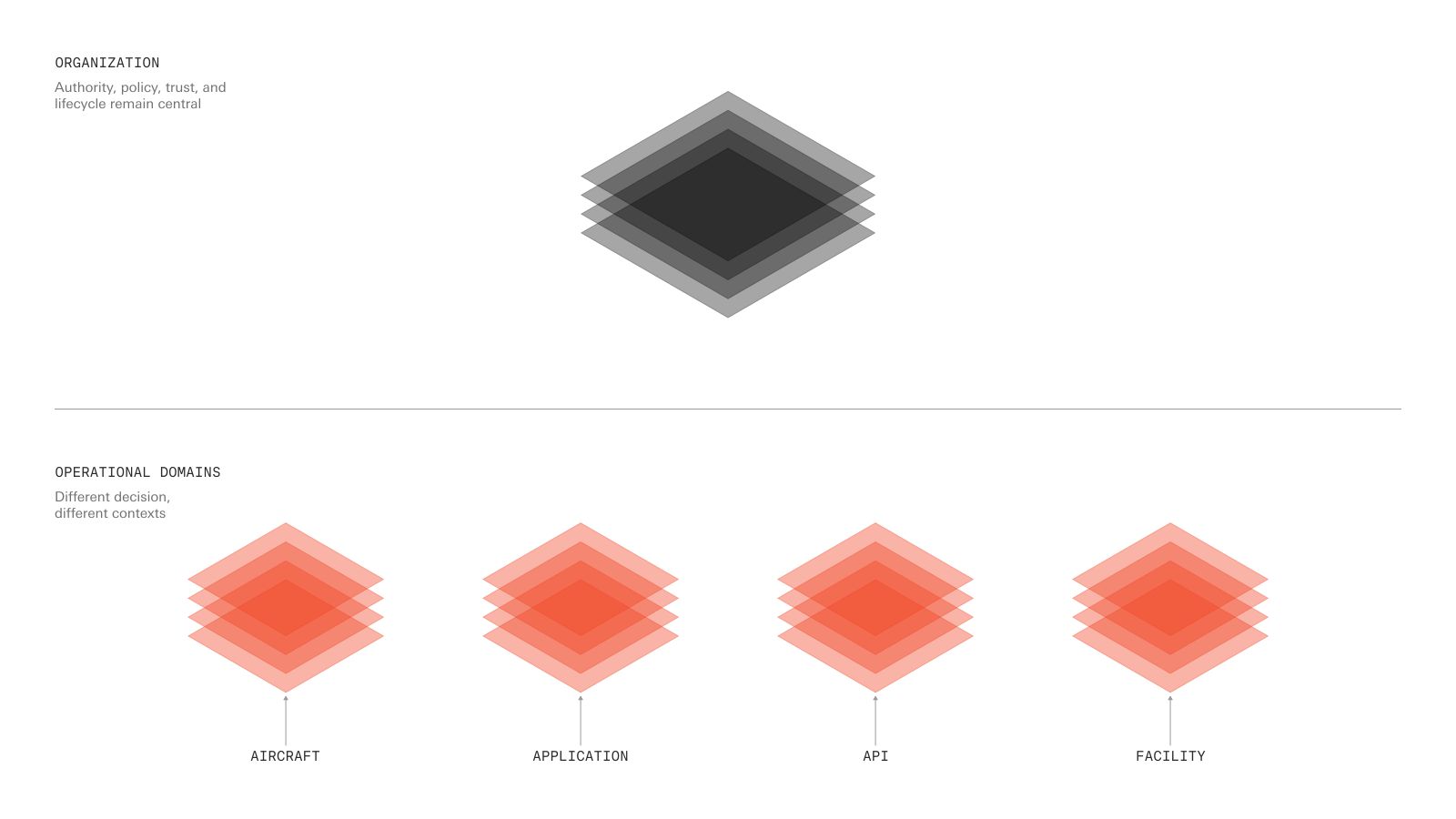
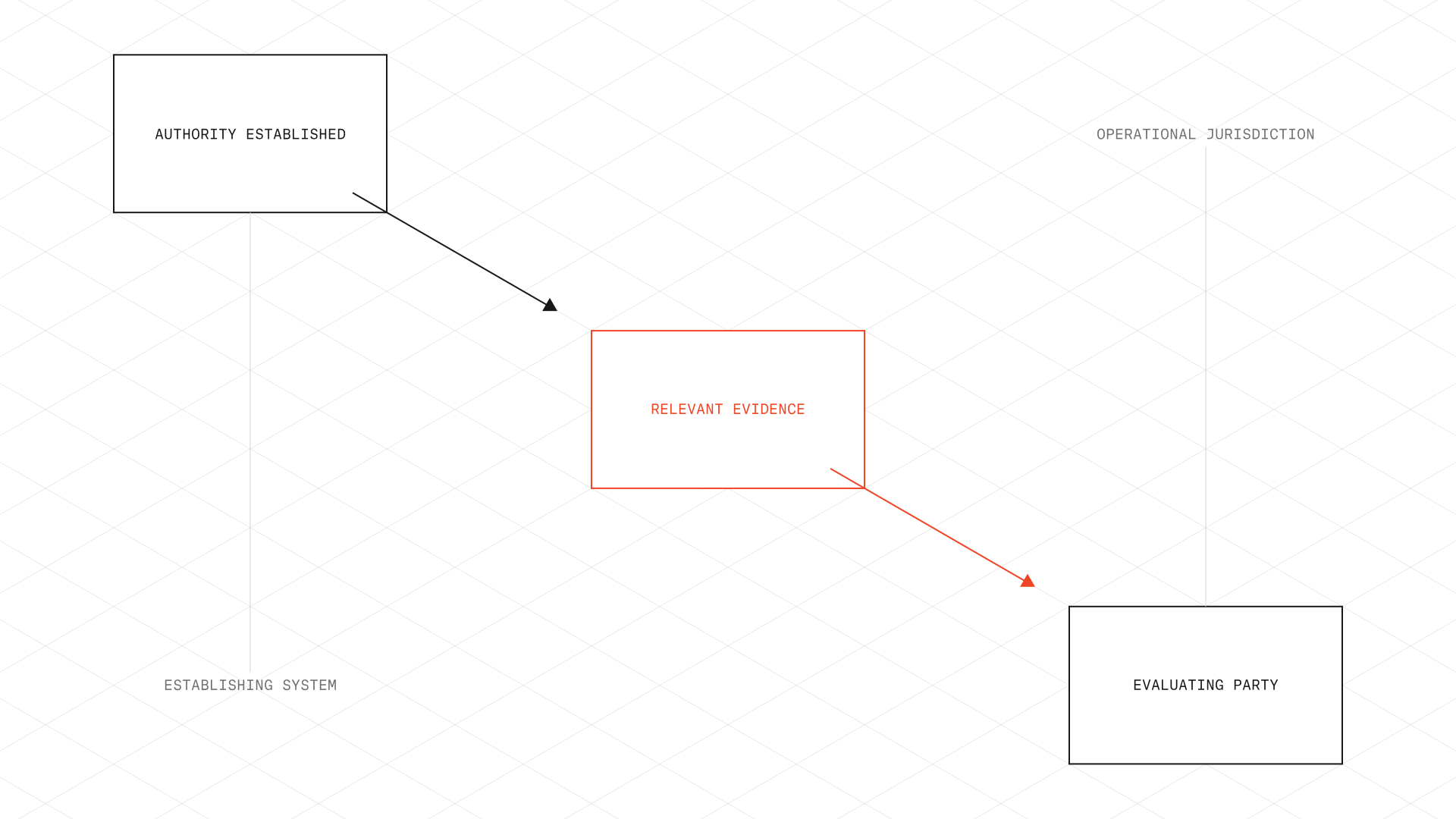
The policy decision point runs in the application domain. Operated by the team running the workload. Identity governance stays central. Lifecycle, certification and separation of duties remain unchanged.
What moves is the decision. Not the authority.
Identity remains authoritative
Enterprise identity, lifecycle and governance continue to operate exactly as they do today.
Policy remains central
Policy is authored, governed and distributed centrally, maintaining enterprise control.
Decisions execute locally
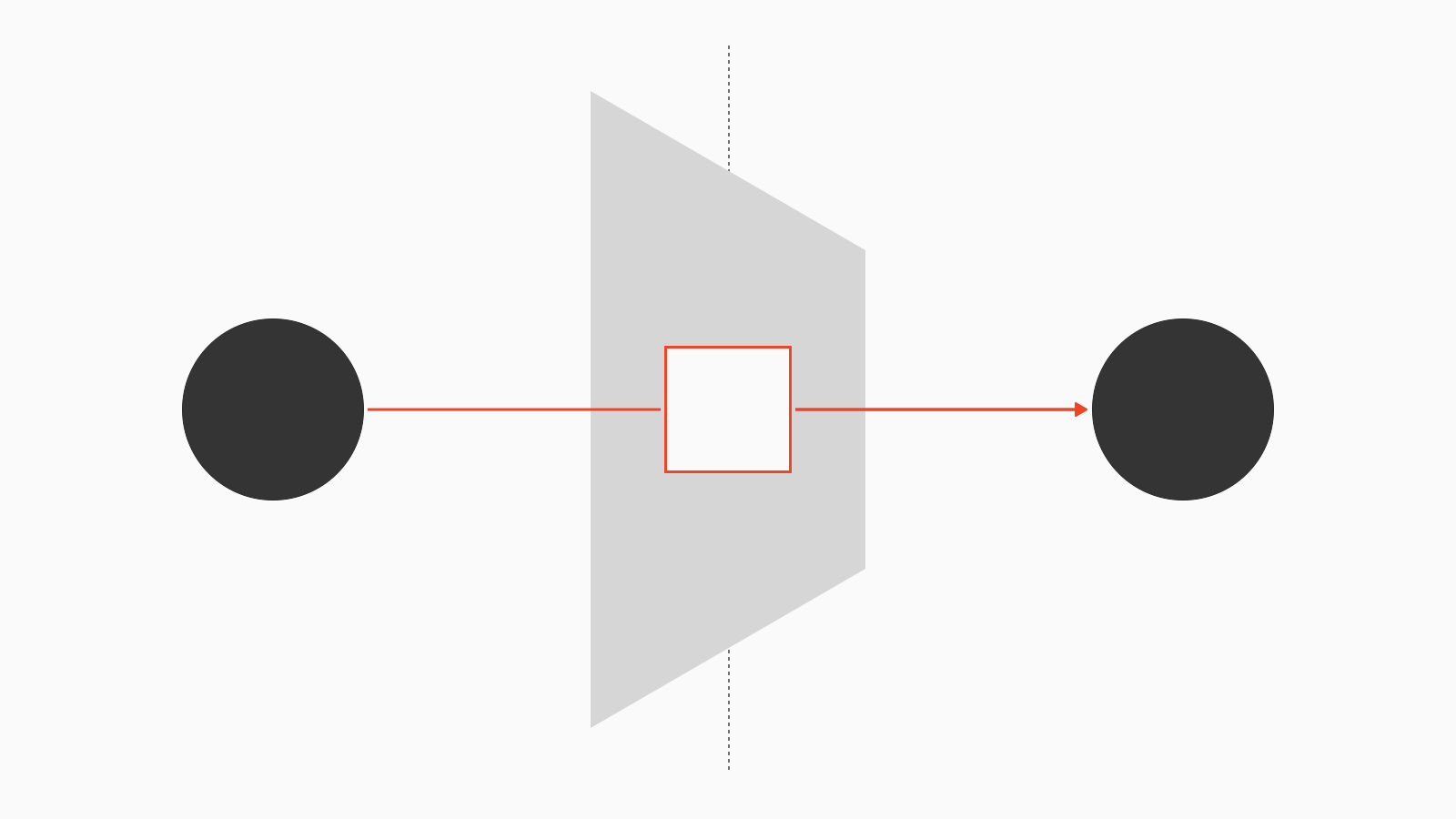
Policy decision points run where the operation runs, allowing access decisions to continue without centralized runtime.
Operations become autonomous
Every operational domain continues independently while remaining governed by enterprise identity and policy.
Governance sharpens. Operations become autonomous.
Decentralized access management separates governance from execution without separating authority.
The operational domain owns its runtime. Identity teams remain focused on governance. Each domain contains its own failures without creating new administrative boundaries.
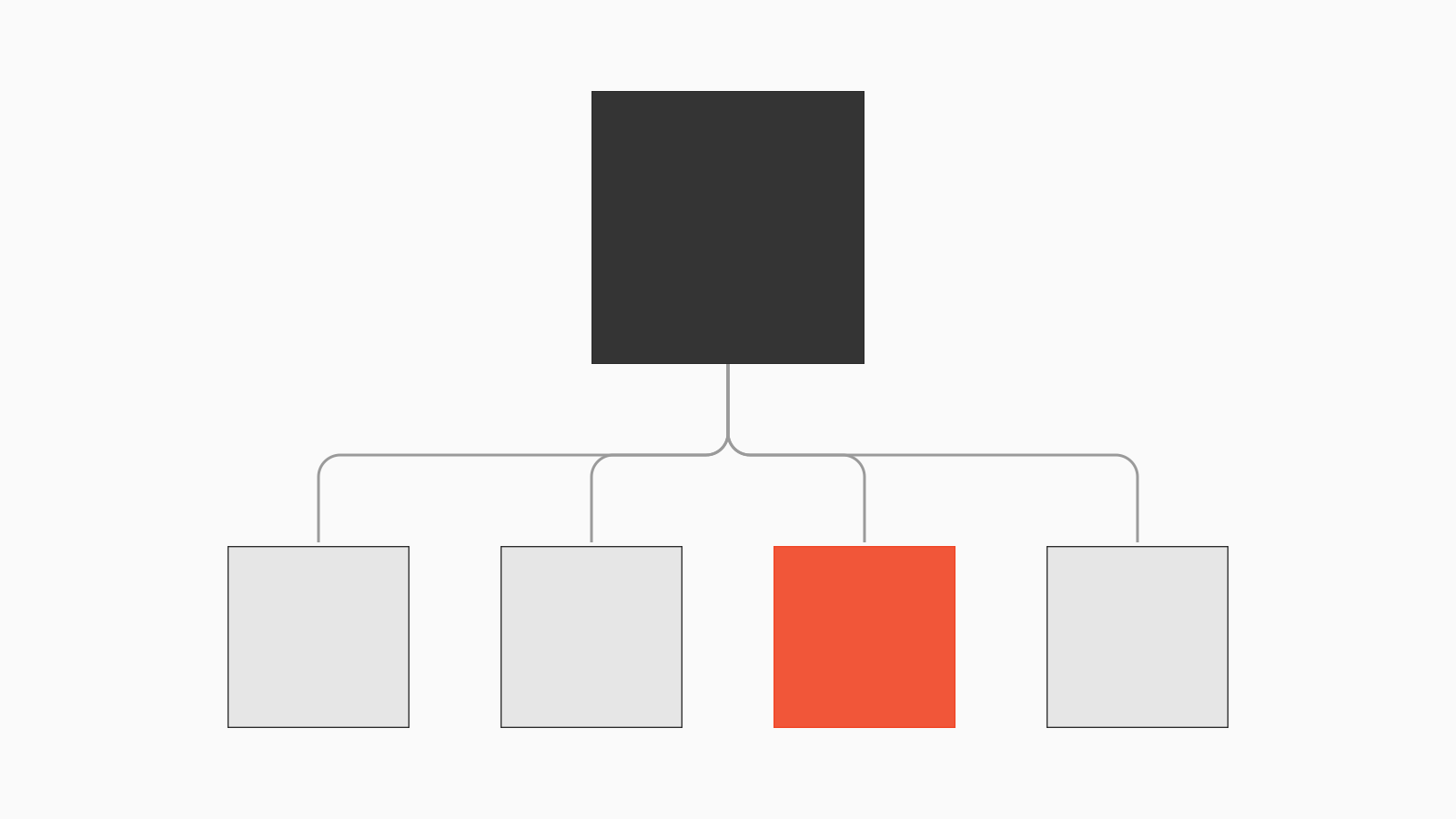
The architecture separates where decisions are governed from where they execute.
Governance remains centralized
Identity, policy, delegated authority and risk evaluation continue to be governed centrally.
Identity teams remain focused on governance. The enterprise remains authoritative.
Execution becomes local
Access decisions execute where the operation runs.
Operational domains own their runtime. Each domain contains its own failures without creating new administrative boundaries.
The architecture separates where decisions are governed from where they execute.
Extend the stack you already have.
Adopt incrementally. Expand deliberately.
Existing IAM and access management infrastructure can remain in place. Authority delegates to Krutho where decentralized runtime is required. Existing applications continue to consume the same interface, with no rewrites required.
Run in parallel
Deploy decentralized runtime alongside existing identity infrastructure.
Extend selectively
Introduce decentralized runtime only where centralized dependency becomes a constraint.
Migrate over time
Expand as operational requirements grow, without forcing enterprise-wide change.
Build for what's next
New workloads can adopt decentralized runtime from the beginning while existing systems continue unchanged.
DDIL reveals the limit.
The clearest environment where centralized runtime stops working entirely.
- Disconnected.
- Degraded.
- Intermittent.
- Limited.
DDIL operations are the operational environment in compression. Every assumption centralized runtime depends on is either absent, partial, or unstable.
A working architecture here is a working architecture everywhere else it has not yet reached.
Most disconnected operations already run Active Directory.
Modern operational environments already have an identity foundation. Krutho extends that foundation with decentralized runtime, allowing access decisions to execute locally while existing infrastructure remains in place.
Infrastructure remains
Existing Windows environments continue operating without rebuilding identity infrastructure.
Applications continue
Existing operational applications continue using the interfaces they already understand.
Governance stays centralized
Identity, policy and delegated authority remain governed by the enterprise.
Decisions execute locally
Operational environments continue making access decisions where the operation runs, even when the center cannot be reached.
Enterprise continuity without enterprise disruption.
Enterprise applications.
Autonomous systems.
Agents.
The architecture extends
Decentralized runtime becomes the foundation for new operational models, not only disconnected ones.
The architecture endures
Every new environment reaches the same conclusion: remove the dependency on centralized runtime.
The next generation of access management.